If you are a yoga instructor or enthusiast, you may be familiar with Alexandria Crow and the often thought-provoking posts she puts on her Instagram account. Her posts often draw a lot of conversation around the topics of the representation of yoga on social media and the ways Western yoga has moved away from the traditional practice of stillness and contemplation.
One of her recent posts addressed the topic of sharing photos of yoga poses on social media. “Patanjali never said anything about yoga selfies or documenting your yoga pose achievements (oh, and neither did Krishna).” (IG posting March 18, 2024).
When I first discovered her account, I really liked some of the things she posted. I could relate to her take on yoga becoming so focused on dramatic poses and how we look doing the pose, rather than the way that yoga can make you feel or making yoga accessible and inclusive for all bodies. I think it’s amazing to start conversations about these things and learn from different perspectives and instructors.
When I looked at the comments and her responses in this recent post, however, I got the impression that she has really dug into her own opinions on the topic and they aren’t up for debate. One comment read: “…as soon as I posted something with me in it…I got way more engagement on my post. I asked my friends why and they said – we just love seeing you. It makes the message personal for the viewer…” her response was ” I run a business too..just sayin (wink emoji).”
Crow has created a wide audience through provocative posts about the ‘true’ nature of yoga, but I’m sure we all have different takes on what yoga can be. It bothers me to think she isn’t open to acknowledging that different things work for different people.
Am I a less authentic yoga teacher if I like to post pictures of poses in a beautiful place? Is it better to avoid social media altogether or give up the imagery of poses?
Alexandria Crow has created a formula that gets people talking, which on one hand is fantastic – yes, we need to talk about the issues with social media and the effect it can have on people’s confidence, body image, and more. But, as with so much of what I see on social media, there is not a lot of nuance in the tone of her account. In a way, it places instructors, somewhat unfairly, into two camps – ones who teach authentically, and those doing yoga for the wrong reasons or presenting yoga in a bad light.
In my experience, yoga can be a competitive community not only in the sense of doing extreme poses (as Crow often points to) but also in considering some approaches to teaching more authentic or “true to the teachings” than others. I’ve heard disparaging things said about the type of yoga taught at community centres, that one yoga method is far superior to another, or about the prestige of one YTT program over another. There is conflict about what the poses are called (is it more authentic to use the Sanskrit names?) and how long you should stay in Savasana. I don’t like this competition at all and I think that’s why this latest post bothered me enough to write a blog post about it!
Why is it so difficult to find balance and compromise in conversations these days?
It’s not just this one example of a yoga account that, in my mind, doesn’t take into account the complexities of how and why we teach and present yoga.
It’s everywhere.
It’s in conversations about politics, parenting, and work. I may not know enough in every realm to be able to argue about how we fail when we don’t think slowly and consider the nuances of the topic, but I feel pretty confident that no one really has it all figured out when it comes to health, wellness, and – in this instance – yoga.
Conversations around wellness aren’t as sexy when we include more nuance. It’s easier to say “stop wasting your time doing cardio!” rather than present a longer, balanced explanation of the value of incorporating strength training if all you are doing is hopping on the treadmill at the gym. We need balance and moderation in our health and wellness routines, just as we need balance in our conversations on these topics!
Similarly, the science on what to eat to be healthy is so far from settled and likely never will be (despite strident arguments that it is!). In a November 2023 article in Reason magazine detailing the issues associated with nutrition science (from researcher biases to inconclusive studies), the author concludes: “So enjoy the pleasures of drink and of the table in moderation, while keeping in mind English poet Alexander Pope’s astute observation: “What some call health, if purchased by perpetual anxiety about diet, isn’t much better than tedious disease.“
I do believe that the lack of nuance has become much worse in recent years. When I first began teaching fitness, I found information in magazines like Self and Shape, which included some lengthier explanations and consultations with expert trainers. There was still a sense that a particular set of moves was the “answer” to better abs, arms, etc. but there would at least be some editorial decisions and research included in the piece.
Just for fun I dug out some of my old issues of Self and noticed a few things:
- the editorial department was huge.
- the advice included research studies, various options, and quotes from doctors.
- Some of the advice in the 2004 issue was still relevant, but much of it has changed.
- man I miss the Self Challenge! I did it every year!
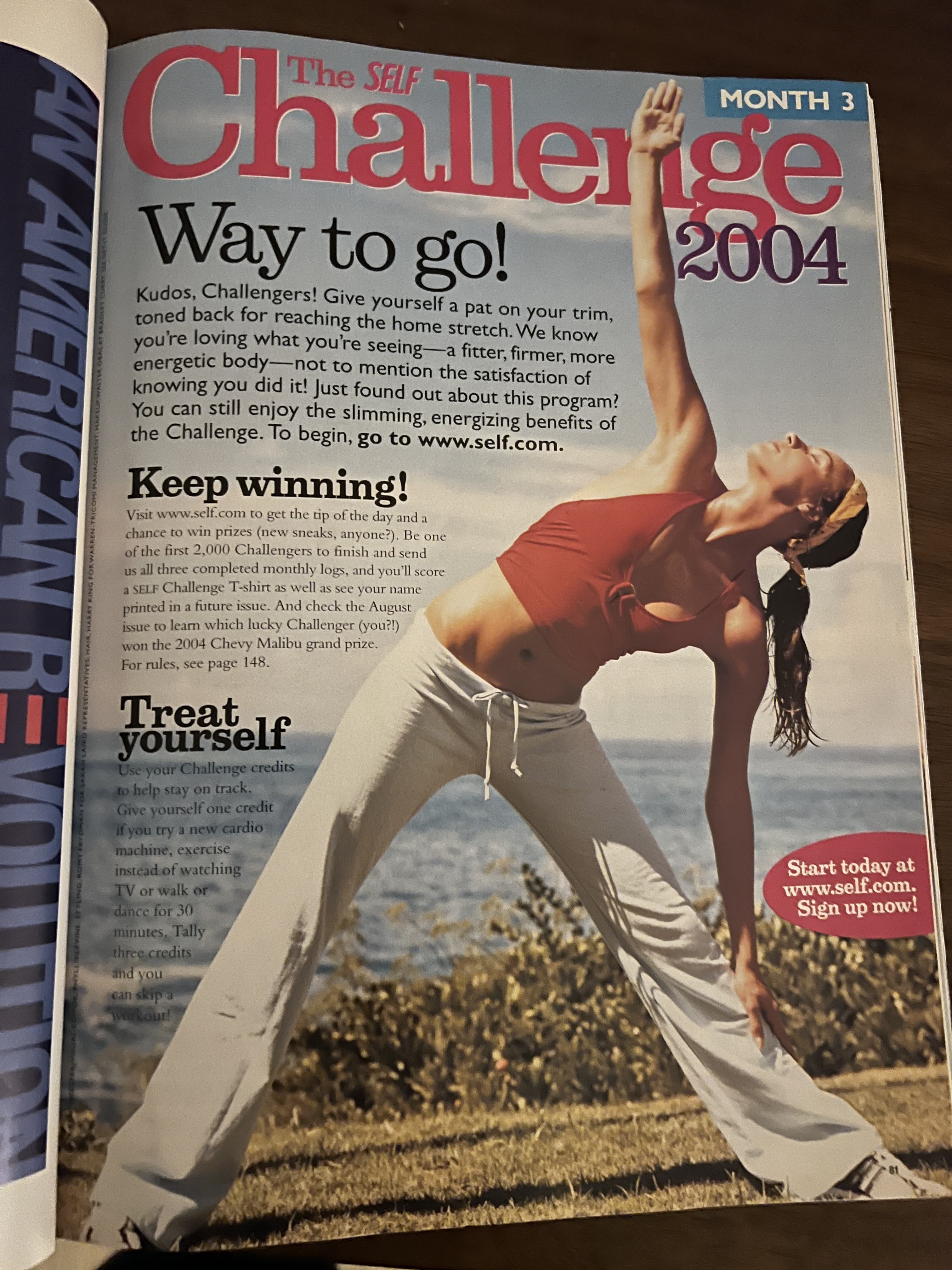
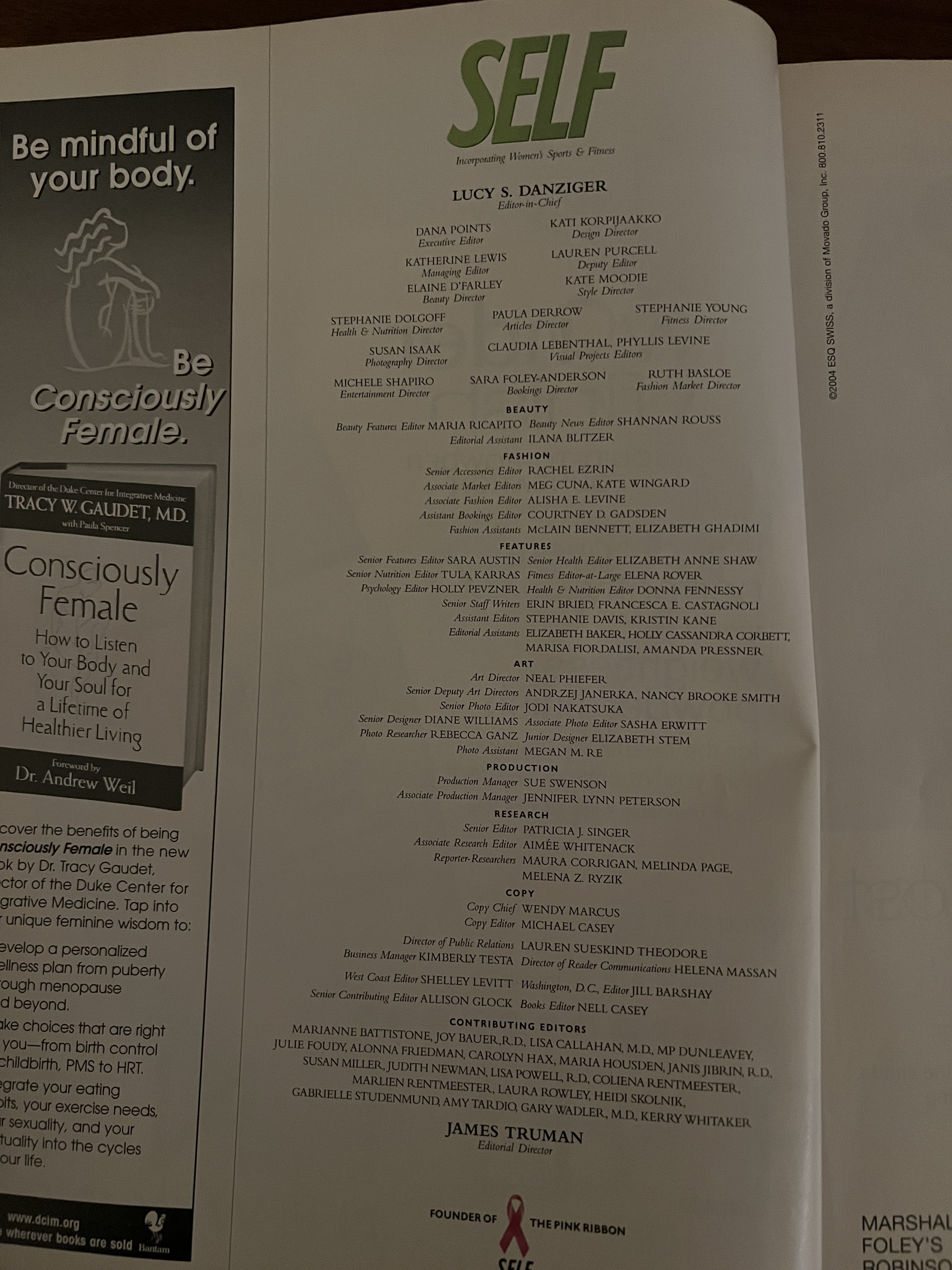
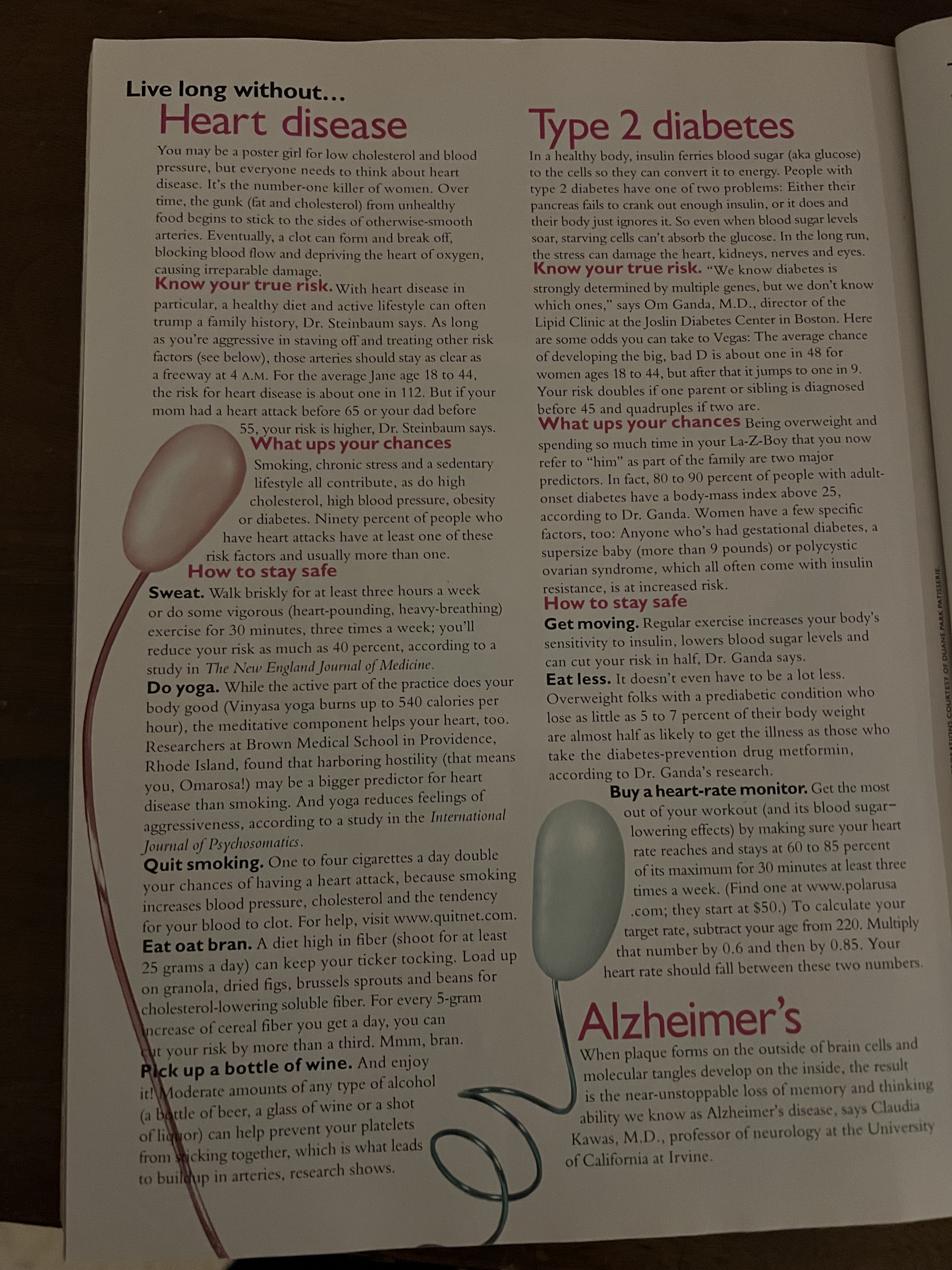
Sadly, fitness magazines are disappearing and now we rely more on blogs and social media for fitness advice. Unfortunately, we have also lost the editorial work, the consulting of various sources, and the nuance in the discussions on fitness & health. Fortunately, there are good examples of health advice still to be found such as mindbodygreen, which includes scientific sources and consults experts. We can still find that nuance but we need to dig a little deeper for it.
Finally, back to the IG post that originally spurred this blog…I do enjoy being challenged by Alexandria Crow’s account. Her observations give me pause and make me reflect on how I engage with my followers. But I do not share her opinion that we shouldn’t engage through sharing ourselves on the platform. I love to see yoga in beautiful places and I love to see the joy that others take in their practice. I believe there’s room for all kinds of yoga and all kinds of postings!
As always, I’d love to hear your thoughts!

 Barre with Justine
Leave a reply to kindlyaligned Cancel reply