
It was a serendipitous discovery one day at the public library when my oldest daughter was a preschooler. Tucked away on the shelves of picture books was an older hardcover book with an intriguing title: Grandfather’s Wrinkles by Kathryn England (with lovely illustrations by Richard McFarland). As I read the book to my daughter, I fell in love with the sweet illustrations and the conversation between a young child, Lucy, and her grandfather as she asks about the lines on his face.
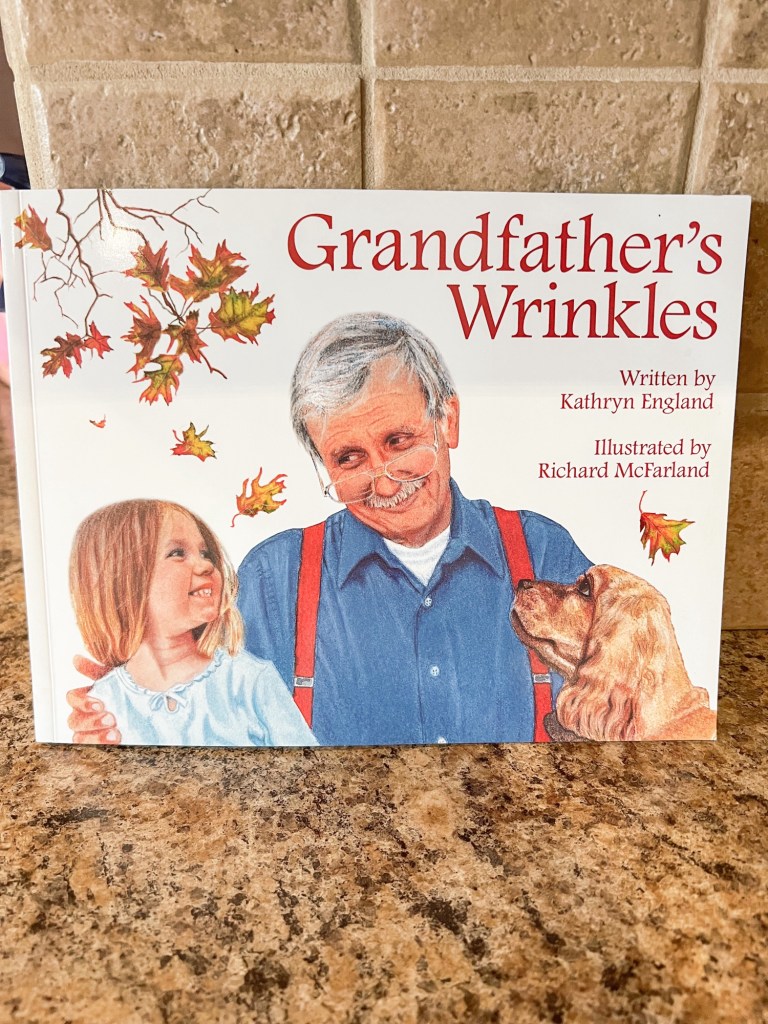
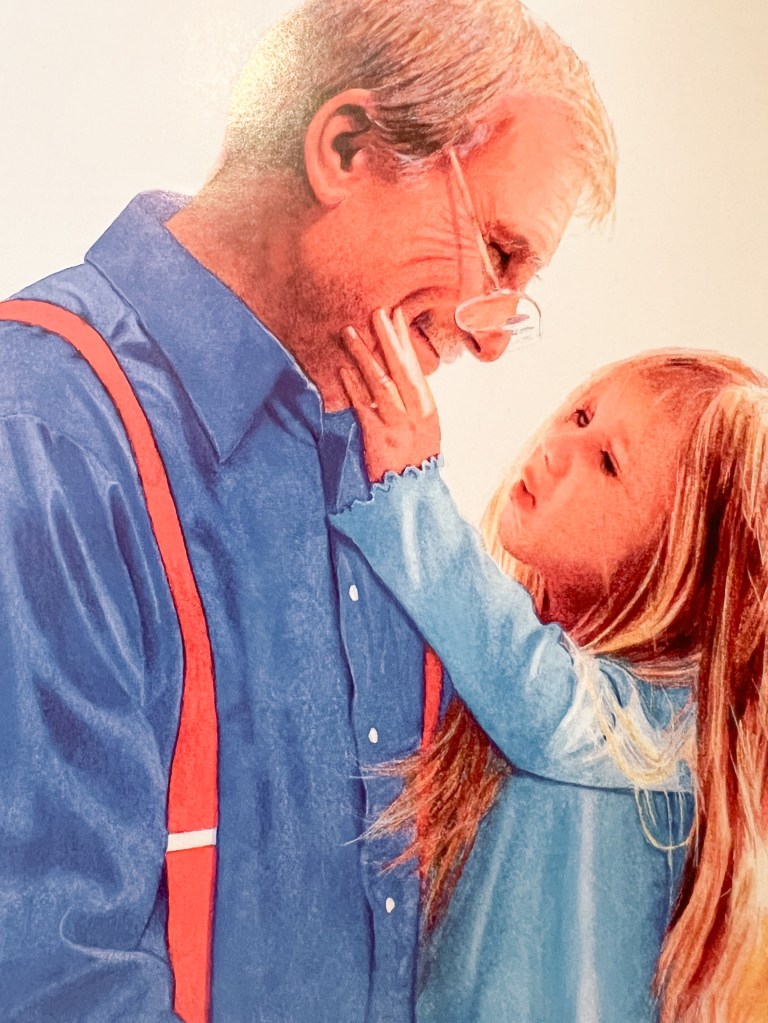
“Why doesn’t your skin fit you any more, Granddad?” she innocently asks him and he gives the best response: “Whenever I smiled an especially big smile, I got a wrinkle to show for it.” He goes on to describe the happy moments from his life, from marrying her Grandma to the day Lucy was born. Wrinkles become memories of great happiness, as opposed to dreadful lines.
When I went to look for it again to share with my littlest daughter, it had sadly been weeded from the collection. It’s an older title (ironically published the year my oldest was born!) but perhaps more valuable than ever in reframing how we see getting older in our society. I ordered a copy for Christmas and my littlest has loved reading it ever since.
The Pressure to be Young and Beautiful Forever
Ever since I turned 40, I’ve felt pressure to look younger. Partly, this is self-inflicted because I’m already obsessed with skincare and beauty, but this is also the age when we start discussing botox, fillers, and active skincare among friends. A time in our society where the pendulum can swing from Pamela Anderson’s “brave” no-makeup, “anti-aging is a lie” philosophy to Kardashian-level reshaping. A moment when women even younger than me have been doing preventative Botox for years!
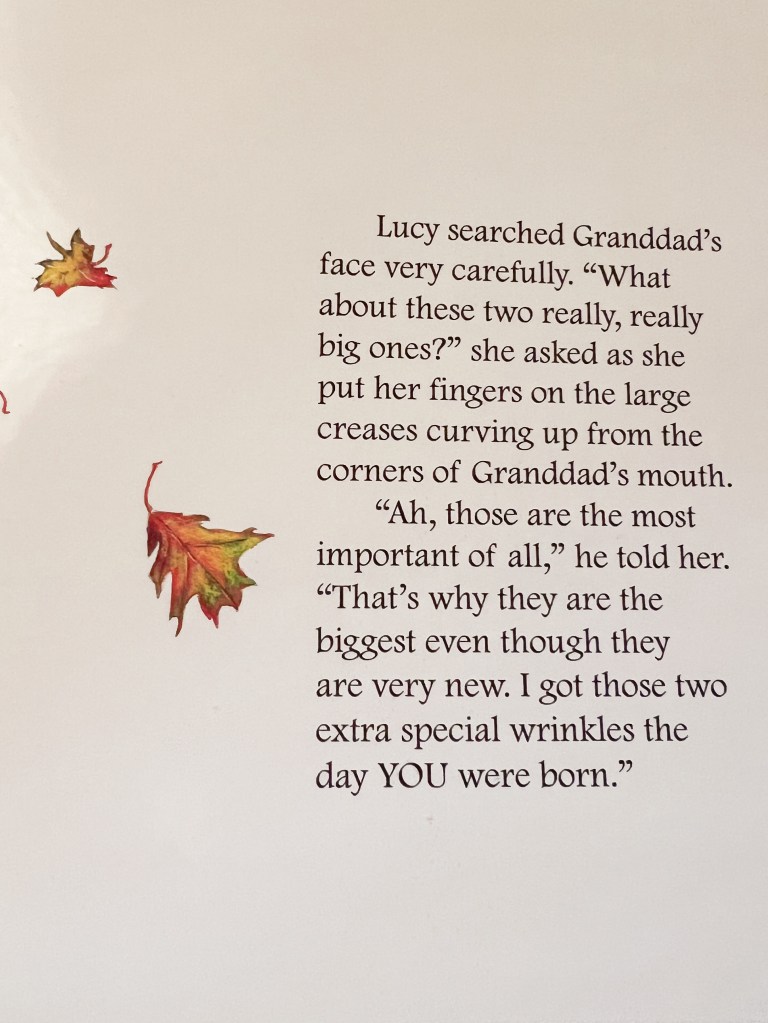
What Grandfather’s Wrinkles taught me:
See yourself through the innocent eyes of a child.
Lucy is straightforward about what she sees on her grandfather’s skin. She sees the lines but she doesn’t think they are ugly. Let’s leave aside the whole issue of gender and aging (see: George Clooney’s graceful transition in the media), and focus on the fact that children generally don’t make judgments about aging, especially when it comes to people they love deeply like grandparents. My children adore my parents and, as my son likes to say, Nanny and Grandpa can fix things like magic.
My youngest daughter is still at the age where she wants to be just like me (sniff!) – she tries to dress like me, carries a purse like me, and loves to touch my skin and hair. She probably doesn’t see the imperfections that I see in the mirror and likely wouldn’t want me to look any different.
Similarly, I remember an exercise in a class once where we were asked to remember a beloved relative who had passed (perhaps a grandparent) and what we remembered about them. Most people shared that they remembered kindness, the perfume they wore, the stories they told. Literally no one said ‘I remember how old they looked before they died.’
Recognize the gift of getting older
Lucy’s grandfather frames his wrinkles in the context of beautiful and happy memories, which he is able to share with her. Without her grandfather’s stories, she wouldn’t know the details about her mother’s childhood or the many moments that shaped his happiness over the years.
I was out for dinner with my childhood friends recently and I thought later about how we lost one of our elementary school friends in high school suddenly, and another of our friends in her thirties. In that context, you start to reflect on how much of a gift it is to be able to live to see your children grow up and have their own children.
Find a balance between caring for your your skin and becoming obsessed
This is my own personal takeaway that you might also feel you resonate with. I’ve had moments over the last few years when I dive deep into trying to do everything I should be doing to stay looking young (no AGEs! retinol every night! no sun!) Then I become drained and resentful, which is no way to really live. You can find a balance between gently doing your best to take care of yourself and your skin, without missing out on the life you are living. It’s hard to have fun when you need to do a 12-step skin routine or when you need to keep up with multiple aesthetic appointments.
I also feel some sense of responsibility for the world my daughters are growing up in. Is there going to be even more pressure or will things have settled down by the time they reach my age?
My hope is that aging well will be more about being the best and healthiest version of yourself, and less about trying to eradicate every sign that you’ve lived a good and happy life. Like Lucy’s grandfather, I hope that I can grow to view the lines from smiling with the same lightheartedness and affection. 🩷


 Barre with Justine
Leave a reply to kindlyaligned Cancel reply