
We have all had those days when life seems unbearably sad. You may feel this physically as a sense of heaviness or as a lump in your throat. You may feel emotionally fragile, where the smallest thing can make you crumble into pieces. What’s interesting is that you may only even realize you have feelings of sadness when your life finally begins to slow down.
It’s easy to push feelings of sadness aside – does anyone really want to be unhappy? Usually it isn’t until I come out of a busy season in life that little elements of grief and sadness surface and demand to be seen and felt. No matter how much you push them aside, feelings always find a way of coming out. Even the traditionally British way of coping, the stiff upper lip or “keep calm and carry on” doesn’t make the bad feelings disappear completely (although there is something to be said for a tiny bit of reticence – I’ve written about “emotional thrift” before!)
But you don’t need to share your feelings with others to sit with your sadness. I’ve read recently that it takes only 90 seconds to FEEL an emotion before it starts to dissipate. It’s reassuring to think that a short period of time can be enough to acknowledge a feeling and then move on.
There are also many practices to dive deeper into feelings and where they may come from (*of course, any ongoing or severe symptoms of depression should be assessed by your Doctor!):
- Journaling or creative writing can be a way to express, on paper, your feelings. This practice can help us acknowledge our various feelings and even focus on the positive parts of life. Read more
- Movement (from walking to weight training) is a well-researched approach to improving mood and feelings of sadness. This 2023 metanalysis (examining 41 studies) concluded that exercise is an evidence-based approach to treating depression.
- Meditation is another research-backed approach to feelings of sadness. Meditation physically changes the structure of the brain and reshapes how we respond to stress and sadness.
Where does aromatherapy fit in?
Gardening is another way to manage difficult emotions and I LOVE that this approach has so many elements playing a role in how it works (there’s movement, caring for plants, sunshine, fresh air, to name a few), especially the aromatherapeutic value of the garden. You might have heard of nature therapy or ‘forest bathing’ – simply being in a natural environment can have a profound effect on our mental health.
You may also consider the wide range of natural scents you encounter while gardening too. You might cut some flowers or herbs, releasing scent molecules into the air around you. You may pause to breathe in the scent of a rose or rub a mint leaf between your fingers. This is aromatherapy in action!
Aromatic plants and aromatherapy can slow us down, bring us into the present moment, and give us space to feel our feelings.
Many essential oils have properties that can enhance our mood and even help to heal feelings of sadness. Rose essential oil (rosa damascena) has been studied for its effect on depression and anxiety, with one 2009 study finding increased feelings of calm and lowered blood pressure and breathing rate. Ylang ylang (Cananga odorata) essential oil is noted for its calming effects, being capable of lowering blood pressure and reducing stress. Many other floral oils have uplifting qualities, including geranium, neroli, lavender, and clary sage.
Citrus oils are bright, energetic, and happy aromas that have research showing their positive effects on mood. Sweet orange oil (citrus sinensis) has been studied for its effect on depression in humans and bergamot (citrus aurantium) is a beautiful balancing citrus that gives Earl Grey tea it’s calming aroma.
Frankincense (boswellia carterii) is a soothing and spicy-scented oil that can be great for calming and grounding the mood.
My blend for happiness
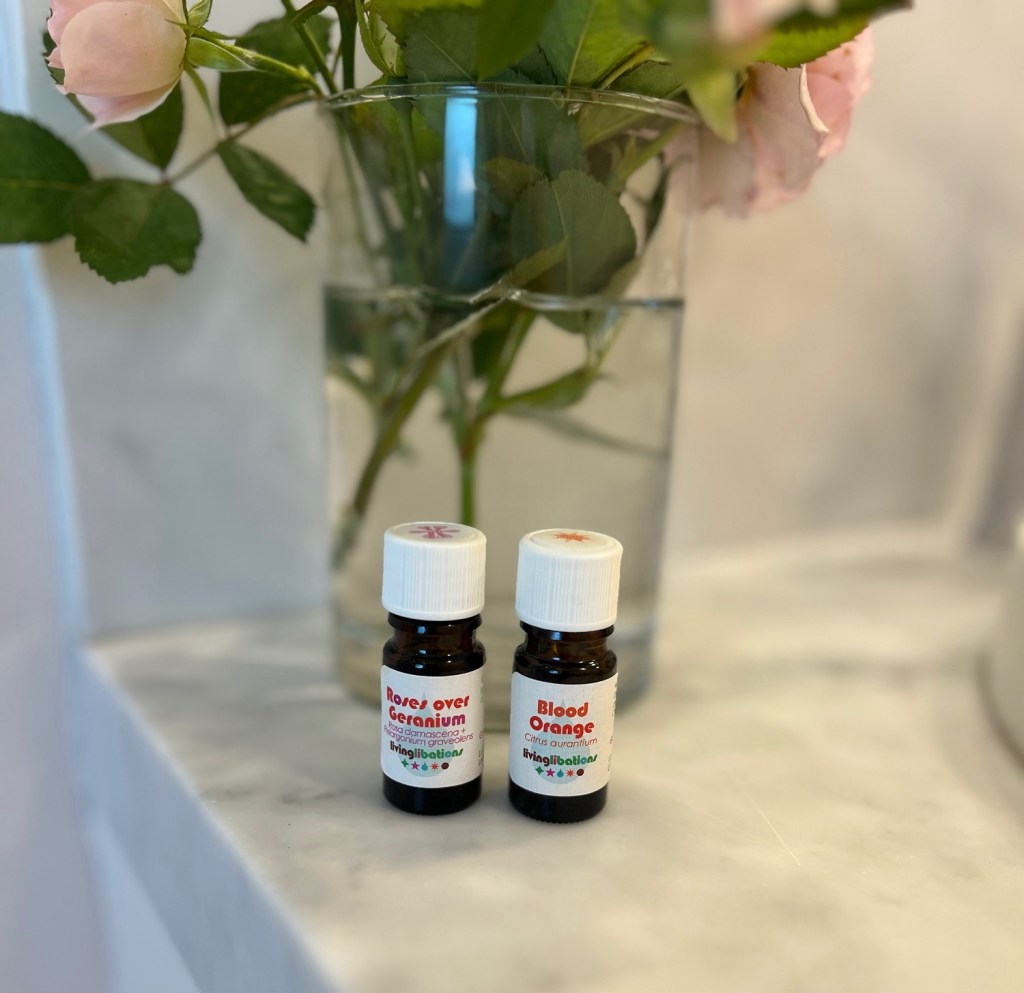
On a recent day when I felt that lump in my throat and sadness in my heart, I mixed up this blend of rose/geranium and blood orange. From an aromatic perspective, it was the perfect mix of sweet floral and bright citrus; even better, it worked to soften my heart and boost my mood. The calming aroma of rose was balanced by the bright energy of the geranium and citrus. Geranium and rose are rich in the alcohols linalool and geraniol, respectively, which are considered anti-depressant chemical components. Sweet orange has limonene, a monoterpene with anti-anxiety benefits.
Helpful Readings:
https://aromaticstudies.com/the-power-of-scent-how-garden-aromas-can-enhance-well-being/
Essential Oils to Boost the Brain & Heal the Body : 5 Steps to Calm Anxiety, Sleep Better & Reduce Inflammation to Regain Control of Your Health. First ed., Ten Speed Press, an Imprint of Random House, a Division of Penguin Random House LLC, 2021.
 Barre with Justine
Leave a Reply