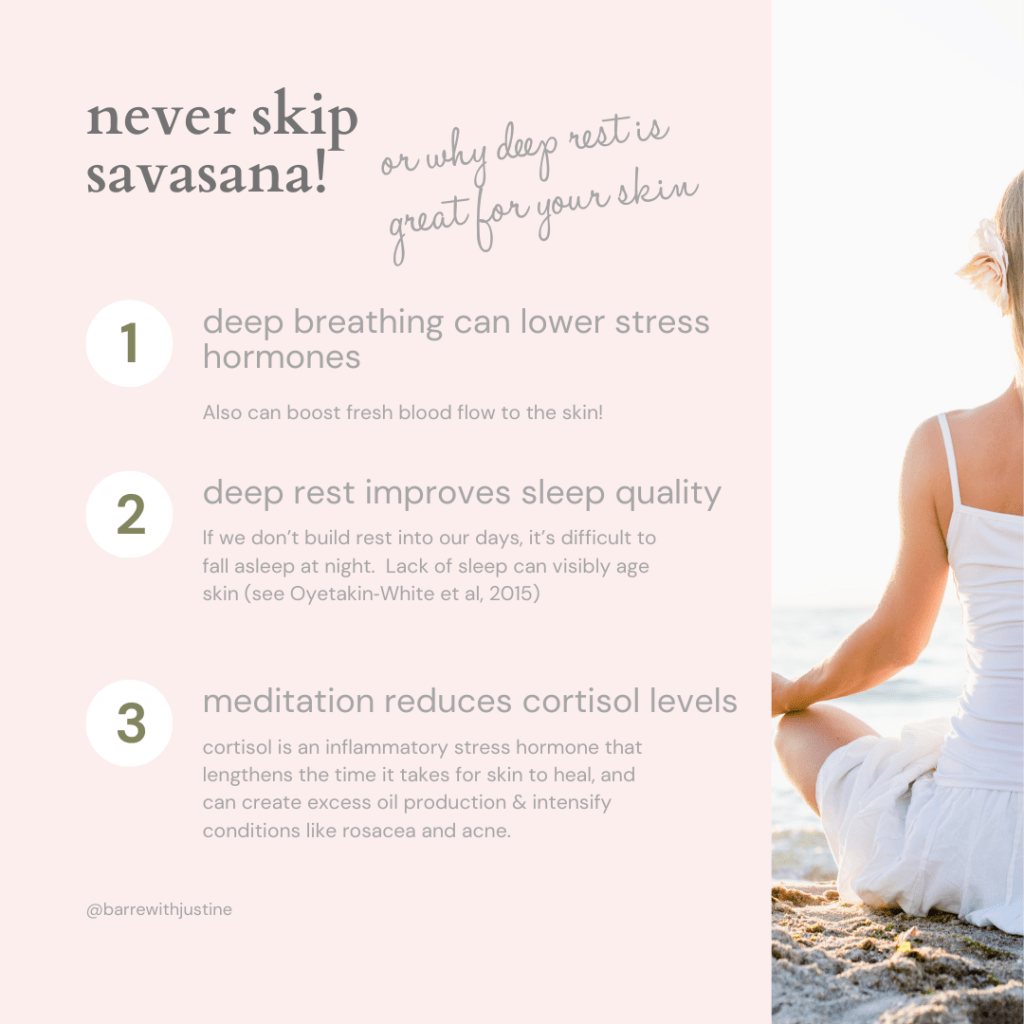
When I was a yoga student (before I became a teacher), final relaxation or savasana was the most challenging part of the class and I often skipped out before the end of class so I didn’t have to lie still for 5-10 minutes. It wasn’t until I started to do more reading and study to become an instructor that I truly understood the value of deep relaxation for the body and the mind.
Savasana often comes at the very end of a yoga class and may be anywhere between a few minutes up to 15 minutes (in a longer session).
Why is Savasana Important?
We don’t take much time to rest in our busy lives. Savasana is an opportunity to practice stillness and focus on quieting the mind and breathing. It’s a bit different to meditation because it involves bringing the body into a position of deep rest – lying in corpse pose or in another position where you can completely let go of tension in the muscles. Our nervous systems can relax and we can find the parasympathetic or rest/digest state more easily.
Judith Lasater describes Savasana as “…the most beneficial pose we can offer for the physical, mental, and even spiritual health of all our students.” (Restore and Rebalance: Yoga for Deep Relaxation, 2017)
As a busy working mom of three, I’ve grown to savour Savasana and love offering the gift of this rest to my students. While I typically stay seated for Savasana when teaching, It is amazing to witness the calmness settle in over a group of students.. When I teach at the university, I sense deeply how much university students need that calm in their lives – they often don’t want to get up at the end of class!
Savasana can be a nice introduction to mindfulness and is an easier way to practice stillness than traditional meditation. By simply lying on the floor in a comfortable position, we can give the body permission to rest and restore.
How can the deep rest of Savasana help support beautiful skin?
While there isn’t a wealth of research specifically on Savasana, there are some benefits including a significant reduction in stress and lower blood pressure. With growing awareness of the connection between the brain and the skin, we are discovering more about how our stress levels influence the skin. The 2014 article goes deeply into the connection between stress and skin, but essentially anything we can do to reduce stress will help to calm inflammation (rosacea, acne, and psoriasis are all inflammatory conditions), increase circulation to the skin (hello rosy glow!) and prevent collagen degradation and the formation of fine lines.
Tips for Savasana
Get comfortable!
I believe the most important thing to remember when setting up Savasana is to be as comfortable and cosy as possible. If you feel cold, uncomfortable or unsafe you will not be able to completely relax into the pose. I always invite students to have a sip of water, gather cosy sweaters and socks or a blanket, and to make whatever little adjustments to feel warm, aligned, and prepared to relax.
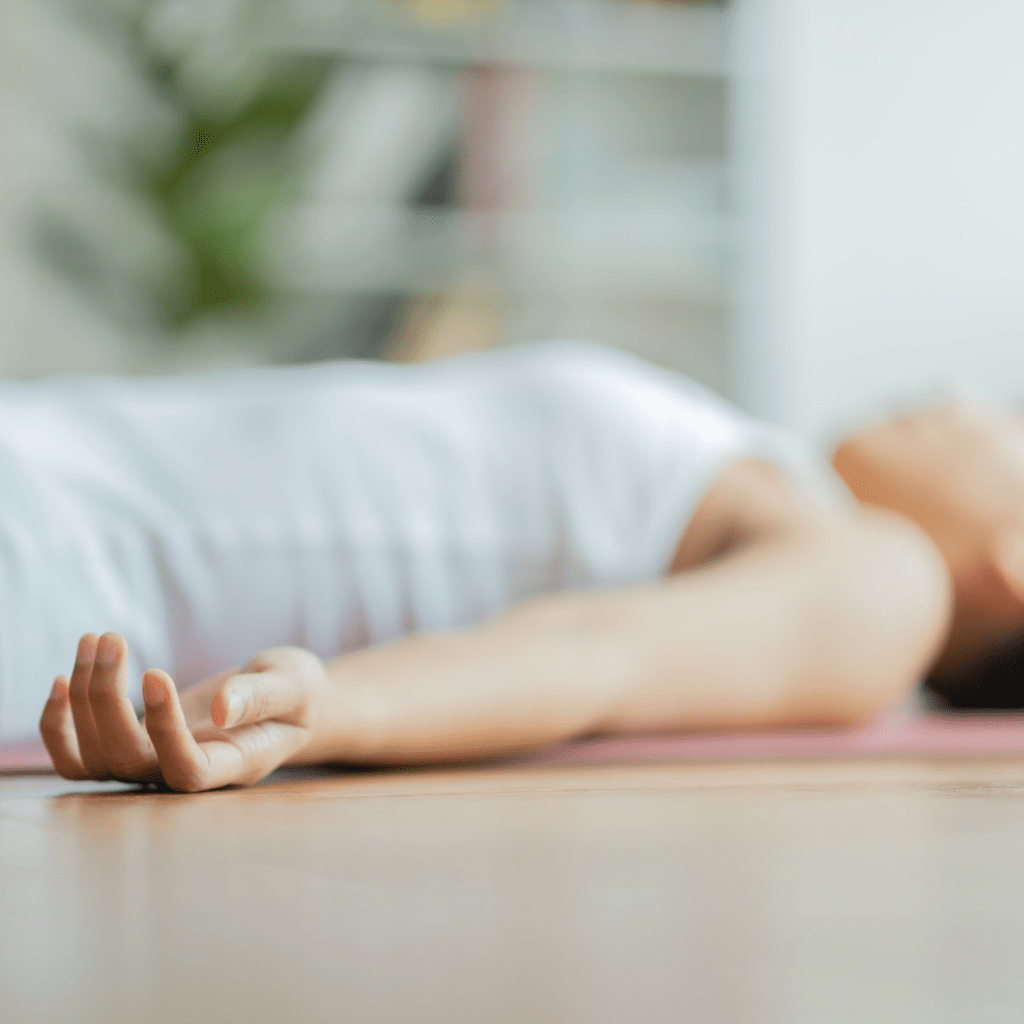
Some additional tips include:
- find a comfortable reclined position
- Use props such as blankets, pillows, or bolsters to feel at ease
- Lengthen the back of the neck
- Turn palms up to relax more through the shoulders
- Breathe softly rather than deeply
- Bend the knees, space feet out and let knees rest inward to address low back pain
“[Savasana] is by far the most difficult of yogic postures, but it is also by far the most rewarding and refreshing.” BKS Iyengar
Do you practice Savasana regularly? And, if so, do you find it challenging?
 Barre with Justine
Leave a Reply