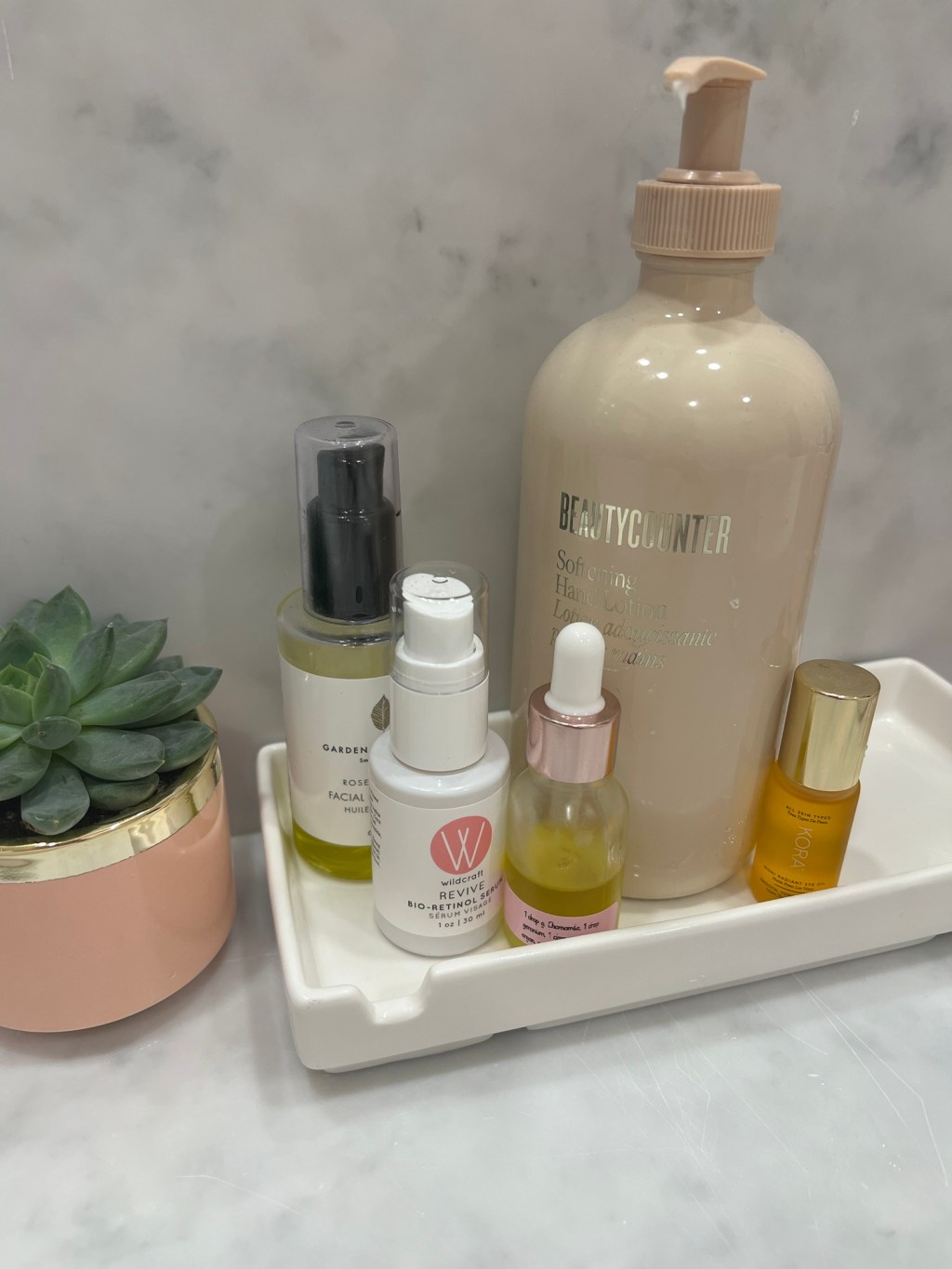
Even before joining Beautycounter in 2020, I had been exploring natural skin care, cleaning supplies and products for years. The education and advocacy of Beautycounter underlined more clearly how important it is to choose, wherever we can, safer alternatives to products that are linked to health and environmental issues.
I totally understand how overwhelming it can be to read the conflicting advice about home and beauty products (they are fine! They will kill you!) so I try to take a balanced approach. For example, I haven’t been able to justify the expense of organic food ever since the price of groceries went sky high, so I try to focus on as balanced a diet as possible and more plants than meat.
In many cases, the “less-toxic” approach can be less expensive and easy to do. Here are my top 5 tips for reducing chemicals in your beauty/home routine:
1. Use natural beauty products
Beauty products are one of the best switches you can make since we literally bathe our skin in cleansers and moisturizers multiple times a day. I’ve realized over the last few years that less is more with skin. I have a handful of products I love and use daily (oil cleanser, a natural active like Vitamin C or a natural retinol, my homemade face oil, rosewater mist and a zinc-based sunscreen). My skin is happier when I’m not being aggressive with products and I love that these choices don’t have any questionable ingredients.
2. find an all-natural laundry product that you love 💗
I love Nellie’s laundry powder, which I buy in bulk at Garden City Essentials. A tablespoon cleans an entire load and leaves clothing smelling super fresh and lightly of lemon. I’ve given up fabric softener but like to use vinegar in the softener dispenser (it doesn’t linger on the clothes!) or wool dryer balls.
Again, clothes and linens touch our skin and it’s nice to avoid any residue that could cause problems for skin or allergies.
3. make your own cleaning supplies!
It is so easy to pick up a few glass spray bottles and create a multi-purpose and glass cleaner spray! You will need vinegar, distilled water, rubbing alcohol and optional essential oils (geranium, lavender, and tea tree are lovely). Here’s a link to Clean Mama’s recipes – they are the ones I follow.
It was hard for me to accept that not everything needs to be disinfected to death, but I remember that, after IVF, we were told not to clean with bleach at home and I wondered why that wasn’t followed more widely. I know there are times that call for bleach, but perhaps not in regular weekly cleaning.
4. Try a natural remedy for headaches, insomnia, etc.
There are so many options to try for minor ailments (note: this is not medical advice! Be sure to chat with your Doctor about any new/unusual symptoms.)
For a headache, you could try a cup of mint tea or some diluted (1%) peppermint essential oil on your temples (test for sensitivity first). Saje also makes a lovely rollerball “peppermint halo” which works very well for tension headaches!
For insomnia, a cup of chamomile tea or a blend with valerian root can help calm your nerves and help you sleep better.
Green tea is great for immunity and skin health, and taking fish oil can be very helpful for skin issues like dryness, acne and eczema.
5. Grow a garden
When spring comes this year, consider planting some veggies, herbs or flowers. A green thumb, I do not have, but we do manage to grow greens like arugula, Swiss chard; herbs like mint, basil and oregano, and lots of roses. Growing your own food is a way to add lots of nutrients to your diet at less of a cost than buying organic at the grocery store. You can nourish your soil with kitchen scraps and help introduce your little ones to new foods. My little ones love picking cherry tomatoes and eating them right off the vine.
Herbs are also so easy to grow and great for herbal tea, cooking, and even beauty products. I love making spa water with fresh mint and cucumber in the summer.
How do you reduce toxins in your own home or in your beauty routine?

 Barre with Justine
Leave a Reply