
Have you ever enjoyed a cup of Earl Grey tea? If so, you have experienced the beauty of bergamot (citrus bergamia) essential oil. The classic blend of black tea and bergamot oil is named in honour of the second Earl of Grey, however the origin story is a little murky (read this history for the three theories!).
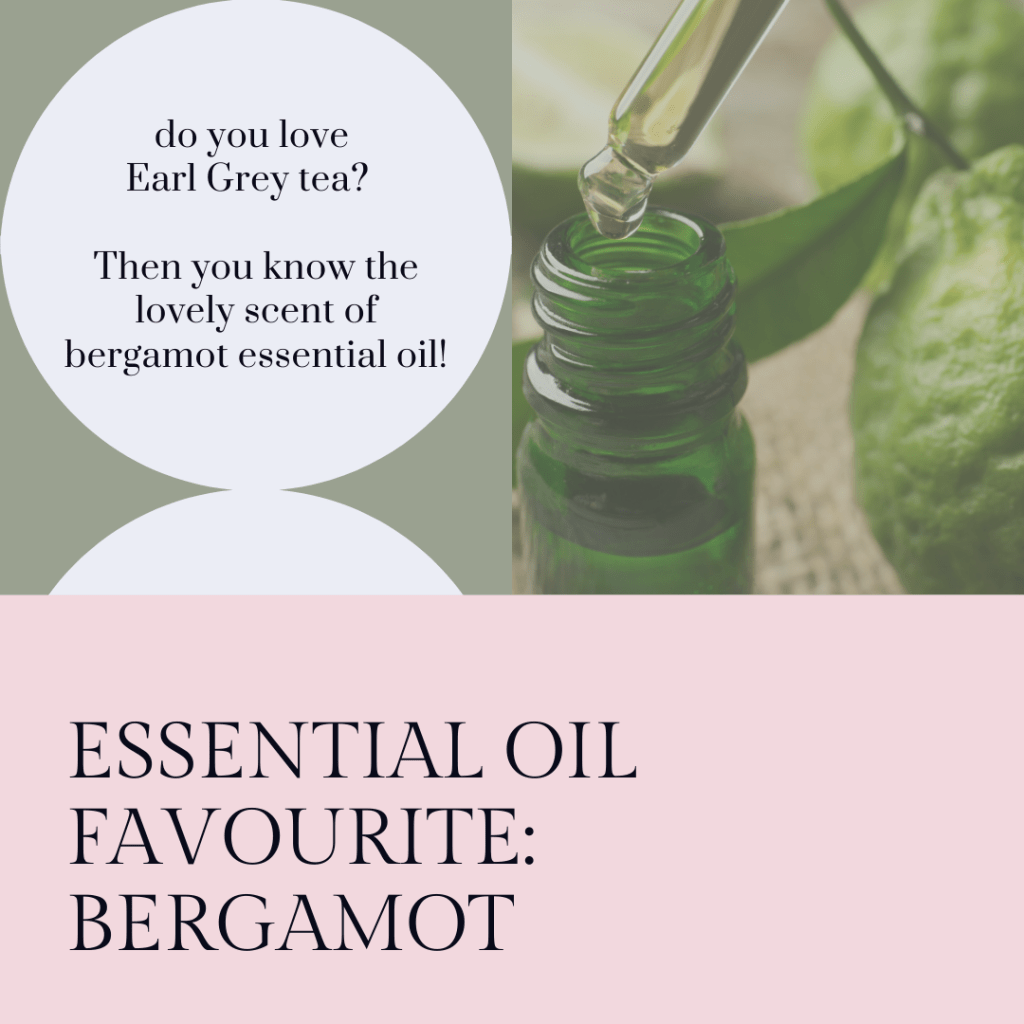
It is a very English tea blend, a favourite offering for afternoon tea, and an essential part of my morning routine (if you know me, you know I have a cup first thing every day! 💕)
The oil that flavours the tea is an important therapeutic oil in its own right. Bergamot can brighten a gloomy disposition, help with sleep and impart a lovely citrusy/floral scent to perfumes.
About Bergamot
Bergamot oil comes from the rind of the bitter orange fruit, a greenish coloured fruit with bumpy skin. It is a light green coloured oil that can oxidize very quickly, so be sure to keep it safely sealed and away from light/heat.
In Perfumes
You may detect notes of bergamot in classic perfumes like Calvin Klein Obsession, Christian Dior J’adore, and Lancôme Idole. There are also many perfumers that feature bergamot as the main scent. This oil is common in both men and women’s fragrances.
Therapeutic Benefits
- Helps with sleep
- Lifts mood and eases depression
- Adds a light and energizing fragrance
- Antibacterial properties
- Robert Tisserand notes that it is considered a ‘cooling’ oil, traditionally used for fevers and to fight infections
How I like to use Bergamot:
I love to use bergamot essential oil in skin care because it works on an emotional and on a physical level. I will add one drop of (FCF) bergamot* to a facial oil blend to enhance sleep and for its antiseptic qualities. Tisserand also notes that the oil can be irritating to the skin but that, in low dilutions, has the opposite effect. As always, it’s a good thing to test a diluted blend first on the inside of your arm to ensure you don’t react!
The fragrance is also very soothing, which adds to the relaxing ritual of face massage.
It’s an uplifting oil, so it’s also lovely to use in a diffuser blended with orange or lemon. Similar to a cup of Earl Grey tea, it’s a nice afternoon pick-me-up to inhale the aroma.
*One important aspect of bergamot to note before using in any skin care is that it can be phototoxic, meaning it can cause a reaction when applied to the skin and exposed to sunlight. You can purchase bergaptene-free or (FCF) bergamot oil to avoid this issue.
Resources
Forlot, Paul, and Paul Pevet. “Bergamot (Citrus Bergamia Risso et Poiteau) Essential Oil: Biological Properties, Cosmetic and Medical Use. A Review.” The Journal of Essential Oil Research, vol. 24, no. 2, 2012, pp. 195–201, https://doi.org/10.1080/10412905.2012.659527.
Tisserand, Robert. Art of Aromatherapy : The Healing and Beautifying Properties of the Essential Oils of Flowers and Herbs. Inner Traditions International, 1977.
Wakui, Nobuyuki, et al. “Relieving Psychological Stress and Improving Sleep Quality by Bergamot Essential Oil Use before Bedtime and upon Awakening: A Randomized Crossover Trial.” Complementary Therapies in Medicine, vol. 77, 2023, pp. 102976–102976, https://doi.org/10.1016/j.ctim.2023.102976. (*an interesting study that looked at 48 university students, using a room spray with bergamot essential oil – found increased self-reported levels of happiness & sleep quality!)
 Barre with Justine
Leave a Reply